

Welcome 🙂
Hello everyone, my name is Heather and I live in Cornwall with my husband and my little one year old son. We have just settled down in Cornwall after moving around with my husband who was in the British Army. I have just returned to work after my maternity leave, I am a SEN TA and Speech and Language Assisstant at a primary school which, I really enjoy. My hobbies are; horse riding, dancing and swimming. I own a beautiful bay gelding called Bobby and an English Bull Terrier called Roxy. I have always enjoyed photography and had a keen interest from a young age. However, it wasn’t until I had my son that I decided to sign myself up for this course in the hope to try and find myself as a photographer. My husband treated me to a Canon DSLR for Christmas 2019 and I have not put it down since. My technical skill are growing by the day and I am still learning lots with experimenting. I look forward to blogging my journey through ‘Expressing your Vision’ with you. Please leave any comments and feedback as It will help me to learn, grow and better my work.
Thank you 🙂
Receiving the handbook…
I safely received the handbook in the post, beautiful wrapped up in tissue paper in a box, I was excited to get reading! I had also received an email from my tutor, welcoming himself! Our first module is all about ‘Expressing your vision’. It says in the guidebook that the first element of this course is a materials and techniques course to enable us to explore and experiment with our work.
First things first, I needed to create this blog so that I can document all of my research and work towards my assignments as well as the assignments themselves!
I slowly but surely got my head around wordpress and have managed to set up this blog! Now lets get to start with the first assignment: The Square Mile.

Assignment one – The Square Mile – asks us to create a series of six to twelve images in response to the concept of the square mile.
I decided to use this as an opportunity to revisit two locations very special to me. My dads work where he no longer works due to ill health. My dad trained national hunt racehorses for a man down in Cornwall, sadly he passed away and has now sold all of the racehorses leaving all of the facilities derelict at his home where his Wife is now residing. The other location was Luxulyan Valley, again another location that played an integral part of my childhood, this is on route to my dads work and we often stopped for a play in the woods, splashing in the river and feeling the spray of the waterfall.
The two practitioners that I chose to research for this assignment were Jodie Taylor and Tom Hunter. You can see all of this research and my full assignment one here. I also looked into the history of Luxulyan Valley which, I found massively interesting!
Feedback for assignment one:
I was nervous awaiting feedback from my tutor, its always hard to know whether you are on the ride track or not but regardless I knew this assignment was a way of showing what I could do already with a camera and some feedback would be useful to take forward. My feedback included helpful tips such as; Shoot in raw in manual mode, purchase a image editing software such as photoshop or lightroom to help edit some exposure issues and also that possibly the jump between two locations didn’t work, maybe an interlinking image to link the two locations together might work? I will have a look into this when I rework this assignment.
My suggested reading and further research from this feedback session were:
- Martha Rosler
- Uta Barth
- Olivo Barbieri
You can see my research and more on my feedback here.
Reworking Assignment one.
I have changed some of the images within the series for assignment one because I visited two locations and it was not clear through my assignment or I did not state that although they were two separate places they are right next to one another and you walked through the valley to get to Prideaux. My original series showed that in one moment we were walking through the valley and then suddenly we jumped inside. Therefore, I have changed image 6 which was the least interesting image to one of the outside of the barn which we entered. I am hoping this will give the viewer a better understanding that you have walked through this journey in the valley and now ended up at this derelict barn, we then enter. I also changed image 2, as it was massively blown out and over exposed, I had a similar image which, you can see on my contact sheets which I chose, it was of a similar angle, I edited this in light room as suggested.
I also changed image 11, to another image which is similar but not cropped as my tutor explained sometimes this can make it look like you are covering up a mistake. I like this image I also like that the concrete bird feeder is not central and to one side.
You can see the new series of images in sequence here.

Part one – from that moment onwards.
I have made a swift start on project one – the instrument here. For exercise 1.1 taking three or four exposures of the same scene, we weren’t allowed to change anything on the camera and the frame had to remain the same. I decided to go on a daytrip to Bedruthen steps beach. I looked out across the sea, it was a very windy day so I thought this could work, maybe the grass will be shown blowing. As I took the three images I was pleased to see that during that time a bird decided to fly across my frame. That wouldnt’ happen again if I tried..
Research Point Read two blogs by Campany and Colberg and summarise their views on Ruff’s work. I have also included a screengrab of an image from Ruff’s jpeg series and had ago at compressing my own image to give Ruff’s pixel effect.
David Campany review on Thomas Ruff.
Thomas Ruff is a German photographer who was born in 1958 and is described as a master of edited and reimagined images. Ruff explores the visual effect of jpeg compression which, is blocks of 8×8 pixels also known as jpeg artifacts within his book called jpegs. David Campany wrote a review on Ruff’s work in 2008 called “Asthetics of the Pixel”. Campany describes his work as cold and dispassionate but surprisingly beautiful. All his photographic images come from archives of many different forms of photographic images in different formats such as: film formats, camera formats, the computer image file and modern art gallery just to name a few. Ruff created a archive grid to try and order the ‘chaos’ and selected his own choice of images. These images were blown up beyond photorealist resolution and Campany explains this allows us to look at these images as figuration and as abstract. Many of the images Ruff chose are of unpredictability; fire, water, smoke, steam and explosions. Ruff’s work on pixels is very different but capturing as Campany explains pixels are grid like, they do not have this scattered effect like grain does and he believes that pixels are replacing that grain effect that the photographic film produced.
Joel Colberg Review on Thomas Ruff
Joel Colberg wrote a review on Thomas Ruff in 2009. Colberg identifies to us what inspired Ruff to begin looking into pixels. It began with the 9/11 attack on the World Trade Centre. When he got the negatives back from the lab they were all blank this spurred him on to look on the web for images and that is when he began experimenting with pixels/jpeg images. Colberg describes Ruff’s images as terribly beautiful and prefers to see them in the book than in person at the Zwirner gallery as he finds these are too big and the little detail that are in the images are hard to see in the gallery itself. Colberg explains he has a unease with Ruff’s work and that the concept relies a little too much on technique. He is left with questions like; What else Is there? He finds it a little too obvious stating that “Of course if you blow up an image it will show funny patterns”.

I have taken one of my shots of Polkerris Bay resized the image to 180×270 pixels and saved it as zero quality to create the same effect as Ruff, please see below.

Campany, D (2008) Thomas Ruff: Aesthetic of the Pixel. Iann Magazine NO.2https://davidcampany.com/thomas-ruff-the-aesthetics-of-the-pixel/ (Date accessed: 29/6/2019)
Colberg, J (2009) Review: jpegs by Thomas Ruff http://jmcolberg.com/weblog/2009/04/review_jpegs_by_thomas_ruff/ (Date accessed: 29/6/2019)
Thomas Ruff (2019) Thomas Ruff born 1958 https://www.tate.org.uk/art/artists/thomas-ruff-2602 (Date accessed: 29/6/2019)
Something I found which is helping me..
I found these little illustrations which are really helping me, I keep them on my phone and when I am out shooting I often refer to them when I feel stuck.


Part 2 – Imaginative Spaces
I took two attempts at 2.1 (zoom) firstly, I went to the Lost Gardens of Heligan to their rope bridge and then I went to my local woods and attempted this exercise whilst looking down the path. You can see that here.
Looking at some of the examples shown in the guide book, I explored Hans Holbein’s painting of ‘The Ambassadors’ from 1533. This was shot on a gigapixel camera. From initial viewing it looks remarkable however, it is noticeable upon looking further and zooming in you can see cracks, dust marks and blemishes.


I began experimenting with one of my images from this exercise and its shown that as I zoom in the images become blurry and become unclear. It just shows that an image can look impressive on first view but when looked at closer/zoomed in you can see it in another way. This also reminds me of the work by Uta Barth who is known for her deliberate blurred photos. You can see examples of her work in my assignment one feedback here.
A note on iso:
Iso is referred to the sensitivity of the sensor to light. When you change the ISO on your camera settings you’re rendering the sensor to more or less sensitivity to light. In simple, a high ISO can create grainy or noisy images, a low ISO creates less grain and clearer colour (Mathies D 2019). Please see an example below.

I have continued through on my exercises to 2.4 as part of project 1 – the distorting lens.
Research Point:
After reading through the photographers within the handbook I chose; Ansel Adams, Fay Godwin and Gianluca Cosci to research.
Ansel Adams (1902 – 1984)
Ansel Adams is a photographer born in San Francisco, California and was mostly known for his great photography of landscapes however, it was known that he was unusually talented at commercial photography and worked on anything from portraits to catalogues. This however, was for more of the financial benefit than it was of love. He is very well known for his black and white West American landscape images. Adams also went on to write ten volumes of manuals in photography and they are some of the most influential out there. Adams helped to create a group called F64 which, included 11 photographers. Their aim was to keep photography “pure”. The group name came from the smallest aperture setting which, produces a crisp background and sharp depth of field (Fargon Jene, O 2015). Most of Adams photographs have an extensive depth of field and he states that it is the position of the aperture that is important in producing that clear picture with defined detail.

As part of this research point for Project 2 Lens Work I have included below an image which, I have found out of my own archive. An image which I have named ‘walking into the distance’ it has a deep depth of field – showing the viaduct pathway going off into the distance. It is also set in black and white something which most of Adams work illustrates also.

Fay Godwin (1931-2005)
Fay Godwin was a British photographer who mostly focused her work on portraits at first but her interest soon began apparent in Landscape photography. She worked closely with a poet writer called Ted Hughes who agreed he would write poems to illustrate her pictures. Godwin, works mostly in black and white although, in the 21st century she began moving onto colour and digital imagery looking more at beaches, nursery gardens and small scales photos (Lenman R & Nicholson A 2005). Godwins work is similar to Ansel Adams in the sense of passion for landscape photography, working in monochrome and also capturing mostly in deep depth of field.

Gianluca Cosci (1970)
Gianluca Cosci focuses his work with shallow depth of field. Cosci states that he tries to put the emphasis on both subject of the photograph and the way it is photographed for example the position. Often the point of view is marginalised and this results in restricted views. Although I find his work creatives, I don’t feel my mind wanders as much as it does with the like of Ansel Adams and Fay Godwin. I feel that the emphasis really is on one key element of the photograph. Below is an example of this work in shallow depth of field from the series called Panem et Circenses.

References:
Bonakdar, T (2017) Uta Barth http://www.tanyabonakdargallery.com/artists/uta-barth/series-photography (Date Accessed 4/7/2019)
Fagon Jene, O (2015) How Ansel Adams and the Photography Group f/64 Found “Pure” Photography https://www.artsy.net/article/theartgenomeproject-how-ansel-adams-and-the-photography-group (Date accessed 4/7/2019).
Lenman, R & Nicholson A (2005) Oxford University Press – The oxford Companion to the photograph.
Mathies D (2019) What is ISO? Camera settings explained. https://www.digitaltrends.com/photography/what-is-iso/ Date Accessed: (25/09/2019).
National Gallery (ND) The Ambassadors – Hans Holbein the younger – https://www.nationalgallery.org.uk/paintings/hans-holbein-the-younger-the-ambassadors (Date accessed 4/7/2019).
Turnage, W (ND) Ansel Adams, Photographer (http://anseladams.com/about-ansel-adams/ansel-adams-biography/ Date accessed: 01/07/2019
Assignment 2 – Collecting.
For this assignment we have to create a series of photographs between 6 – 10 on the following subjects:
- Things
- Views
- Heads.
I had a good think about what I would like to do for this assignment and after some pondering I decided to try my hand at canine photography. Some in a natural setting and some in a studio setting.
Best get purchasing…! For this assignment I have needed to order some backdrops in white and black, a backdrop stand and some lights with diffuser umbrellas. I also had a think about some props for this I purchased a basket and a blanket.
After doing some research into some studio based photographers, canine photographers and research in artificial light I completed assignment 2 here.
Feedback for assignment 2:
I received some useful feedback from my second assignment – collecting. I was a bit nervous about it as I know in my own reflection I still have a long way to go with my photography.
Firstly, it was clear that I chose a subject that I engage with which is always a good starting point with assignments. Moving forward from here and to push myself out of my comfort zone and not wholely rely on the technique of photography such as the exposure, focus and composition. Im still trying to find my ‘photographic voice’ but I do believe this will come with experience.
Next time I am going to shoot just in one location rather than several as often it asks different things of the viewer and thinking of a series it doesn’t flow as easy so this is something I will definitely work on for my next assignment.
I already know that research is my weak point so I am going to really focus on my research for the next assignment and use the cycle; inspiration – action – reflection.
Reworking Assignment 2 – Collecting
I looked back through my assignment two feedback and changed my image series as per my tutors comments. I don’t think I was putting across what I was trying to communicate with my pictures with having repeats of the same dogs therefore, ive taken these out so each image is a different dog. The idea I was trying to show throughout this assignment was the different personalities of the different dogs. My tutor wasn’t keen that there was a sudden jump from outisde to inside but again as part of my assignment I wanted to explore both studio based work and natural settings so I have decided to keep my studio images in the series.
You can see the reworked series here.
My suggested reading following feedback:
Jo Longhurst (1962)
I am researching Longhurst as part of my suggested reading through my assignment two feed back as I focused my assignment on canines and Longhurst too has done a series of photos ‘twelve dogs, twelve bitches’. Longhurst is a UK based artist and photographer and has worked on a project which she named “The Refusal” that included 24 portraits of British show whippets a series which she named twelve dogs twelve bitches. She chose this subject as part of a personal matter after she went into showing her own whippet called Vincent and because she wanted to research further into the ‘perfect’ dog In the series Longhurst focused on removing the whippets traditional heavy leather collars and replaced it with what looked like fishing wire that was held in an upright position but almost completely blanked out by the studio lights. As the Hotshoe magazine (2008) explained within their article this is to emphasis a sense of control. The white backdrop background highlights their form and defines their shape. In my opinion looking at the twelve dogs and twelves bitches separately it allows you to look for comparisons you can really notice the difference between the way the dogs and the bitches carry their tails. I enjoyed looking at this series, as well as creating technical and interesting images you can expand your thinking as a viewer into the way the dogs are breed to be more visually pleasing for the judges. I like the way that Longhurst removed the leather collar as in my opinion this allows us viewers to see more of the dogs neck and she still kept that thin piece of string which, made the dog stand to attention as if in a show ring. The series actually allows you to be the judge and enables you to chose which one is the ‘perfect’ dog in your opinion and I like that!

Wainwright, J (2008) Hotshoe: Twelve dogs Twelve bitches. http://www.jolonghurst.com/media/update/hotshoeoctnov2008.pdf (Date accessed: 20/07/2019)
Part 3 – Traces of time
Research for 3.1 – Freeze
- Jeff Wall
- Harold Edgerton
- Philip – Lorca DiCorcia
Jeff Wall (1946)
Jeff Wall is a Canadian photographer who creates and produces large scale imagery. Jeff includes elements of fine art, borrowing narrative and visual details into his photos all varying from different genres. Most of Jeff Walls images are created from experiences he has either seen, heard or read up on, he will then react this by creating and staging a scene showing frozen moments that happen in the middle of events. For example, the image ‘Milk’ as shown below, an image made through large back light transparency (187cm x 229cm). In this image there Is a harsh geometric background, which makes the scene stage like. The man has a clenched posture alongside the milk spillage it recreates the anger emotion.

Harold Edgerton (1903 – 1990)
Harold Edgerton first began as an electrical engineer and received a degree In electrical engineering in 1925. and found his passion for photography when he started to photograph his scientific experiments. It was his first experiment that he tried to form the perfect Coronet from just one droplet of milk. To fulfil this experiment he created something called a ‘stroboscope’. A stroboscope creates short bursts of light this resulted in images taking split second pictures of subjects in motion which, the human eye cannot see. Some of Harold’s photos had exposure times less than 1/10,000 per second. Harold was known as the explorer of strobe photography and his skill allowed him to capture images such as; balloons bursting and bullets hitting an apple. Harold got the nickname of ‘papa flash’ from his discovery and even helped to find the American civil war battleship USS monitor under the sea as well as finding the Britannic, this was through using side scan solar technology.

Philip – Lorca DiCorcia (1951)
Philip – Locra DiCorcia is an American photographer who mostly focuses on capturing people and places. Each photo has planned compositional strategies, objects are placed purposely and he ensures the lighting and framing is precise. Philip works most commonly in colour. One of his most famous series of street photography images are ‘Heads’. This series shows photographs of people walking through the city of New York. Philip stages these images so that the light illuminates an isolated their heads, this allows the viewers to have a closer inspection and see significant details which may get lost amidst the usual hustle and bustle of city life. These people were also completely oblivious to Philip taking the photos. Please see an example below. In my opinion, the way that he has planned and created this series it portrays the people in a film star/celebrity way.


I have spent the day experimenting with this exercise. I decided to try going with freezing a shot of my dog dropping her ball in my horses water barrel. I was happy with the outcome and especially liked this shot below as it reminds me of an ocean wave.

Research for exercise 3.2 – Trace
Maarten Vanvolsem (1974)
“Looking for time in the image”. Maarten Vanvolsem is photographer from Brussels who explores expressing time through photography. Vanvolsem is well known for his series of images called Contraction of Movement created in 2007, please see an example below. He focused on a technique called strip – scan this skill captures the single line of frame in sequences which creates the image over a matter of time. As Vanvolsem explained in the image and narrative article in 2008 it creates a contraction of movement, the distorted background and moving the still camera results in more limbs being noticeable and no face, this gives the impression of the person spinning (dancing) in a right to left linear motion. Many people reflect on the relationship within the photographic image – often this comes down to time. It’s not the object being captured but actually the depiction of time (Vansielegham et al 2016). People are always wanting to freeze time, instead photography can contrast movies as a moving medium. Move the camera and create a film inside it this will create a time based composition (Vanvolsem, M 2014).


Gareth Davies.
Gareth Davies is a London based photographer who focuses on panoramic images. Davies created these images using wide – view and slit scan methods with a camera which he built himself inspired by Michael Disariez. For the split scan images Davies used a rotating panoramic Larscan camera which, was self built. As Bob Erickson explains, a Larscan camera works on the basis that there is a stationary disc inside the camera body, the film then gets pulled through by a motor through the camera and held still by the disc as the camera rotates 360 degrees around it. For this to work the diameter of the disc needs to be double the focal length of the lens. There is an example of two cameras that Gareth Davies has built below. Also below you can see an image that this camera produced, this image shows him riding a tricycle through the Wellington Arch in Hyde Park, London. As you can see this technique and method emphasis’s the movement of time through an image. In my opinion I feel like I am also riding on that tricycle and going on the journey with him.

Christopher Doyle (1952)
Christopher Doyle is a cinematographer and actor from Sydney, Australia. He is famously known for shooting several films such as; Paranoid Park, Hero and Chungking Express in which he worked closely with Wong Kar – Wai. The film Chungking Express was shot by Doyle In 1994 in just 23 days and was shot in the busiest part of Hong Kong centre (Lee, A 2019). It was within this location that they filmed the opening scene which, was a chase through the market. Doyle shot this scene so quickly at 1/8 of a second that it created movement blur, something which you wouldn’t usually see in movies (Angelo, M 2013) this was created by removing every second frame whilst duplication the others something known as the shutter step effect. I have screen shot from a YouTube clip of the opening scene of this movie to show you the effect speed and time can have. The link to see this yourself is here: https://www.youtube.com/watch?v=DZ1feC67GO4.

Francesca Woodman (1958-1981)
Francesca Woodman was a photographer who created rather dark looking images based on personalised psychodrama who sadly committed suicide at just 22 years old. These shots are created by long exposures and consist of blurred movement which diffuse the figure captured. Gerry Badger reviewed the work of Woodman and says that it has an 1970’s American feel to it as they have tendencies to combine their photography with their personalised psychodrama. Woodman focuses on framing her images in empty spaces/rooms with minimal props used, when she does use props they consists mainly of mirrors and vitrine (G, Badger 2019). Tim Burrows (2010) explained in ‘anothermag’ that he believes her images hint at her suicide and that they are more of an abstract piece of work. When Woodman would show her face within her work, she always had a blank like expression and a face that posed as possessed in Burrows opinion. Please see an example of her work below.


Research point
I have reached the point in my handbook where it is asking for me to write up research on the decisive moment and to give an account on the three differing views by Henri Cartier – Bresson, Zouhair Ghazzi and Paul Graham.
Colin Pantall on Paul Graham (1956) – The Present.
Paul Graham is a documentary and fine art photographer based in England and was one of the first to combine colour photography along with documentary in the 1980’s. Graham produced a collection of street photography based images in a series known as ‘The Present’. These images included people walking the streets of New York and was presented in the form of a book. Colin Pantall (2012)explains that Grahams work makes you flick back and forth between images, you will study an image – then go back to see what was similar or what has changed from the previous image. These are not necessarily ‘decisive moment’ images as he is selecting where to take the photos and when, they are done very synchronised and come across as more narrative. One photo leads on from another and this gives a story based feel to it (Badger, G 2019). Gerry Badge does an interesting view in the 1000 magazine and he states that as the images are in either duos or trios it gives a drama based feel to it in a rather formal like manner. This is a great link https://www.youtube.com/watch?v=_iw2zDsXQDc where you can see Jorg Colberg (2012) go through ‘The Present’ book/images – I found this rather interesting.

Zouhair Ghazzal on Henri Cartier – Bresson.
Zouhair Ghazzal is a photographer based in Chicago and has written his views on ‘the decisive moment’ similar to Colin Pantall who reviewed Paul Graham’s work. The decisive moment was formed by Henri Cartier – Bresson in the 1930’s he says that “its always luck. It luck that matters, you have to be receptive, that’s all. Like the relationship between things, its a matter of chance, that’s all. If you want it, you get nothing. Just be receptive and it happens”. Ghazzal describes the decisive moment as small and unique and something which cannot be repeated. However, he does believe that it is more of a cliche than reality. Most photographers have had to study the decisive moment to be able to produce and create their own work (Ghazzal, Z 2004) Although, it works better for bodily images such as when Cartier – Bresson captured peoples gestures as no two gestures are alike – Ghazzal believes it does not work as well for landscapes as they are too uninteresting. The decisive moment really has to be a ‘right place right time’ scenario whereas, like Ghazzal I believe photographers could be trying to hard to get that ‘decisive moment’ and therefore, its becoming too stages and becomes more of a narrative similar to Graham’s work.
My Opinion on the decisive moment – I feel as though the decisive moment can take a moment or two to get your head around. There are lots of different variations of the same meaning. Do I believe in the decisive moment? Absolutely – I do think that any image can be part of a decisive moment some are just more staged that others. I do like the way Meyerowitz looks at the decisive moment. Meyerowitz was interviewed by Leo Benedictus for The guardian, here he explained that street photography helps to carry a moment, it shows you the past to present in the sense of a time capsule. Meyerowitz followed Henri Cartier – Bresson’s decisive moment way for over ten years and decided to try moving away from the Cariter – Bresson theory and be more expressive and dynamic. Cartier – Bresson folcuses on putting the action in the middle of the frame but Meyerowitz trialled with different angling and space (Benedictus, L 2009). I like that Meyerowitz has more of a understanding of what he wants to portray within his images for example he saidpeople will look back and say that’s hat New York use to look like 75 years ago (you can see this image below). It doesn’t seem as staged as Cartier – Bressons work who seems to focus more on the composition, geometry and finer details.
Angelo, M (2003) How Wong Kar-Wai turned 22 seconds into an eternity http://thedissolve.com/features/movie-of-the-week/221-how-wong-kar-wai-turned-22-seconds-into-an-eternit/ (Date accessed: 02/08/2019).
Art net (ND) Philip Lorca DiCorcia http://www.artnet.com/artists/philip-lorca-dicorcia/ (Date accessed 13/07/2019).
Badger, G (2019) Francesca Woodman http://www.gerrybadger.com/francesca-woodman/ (Date accessed: 05/08/2019).
Badger. G (2019) Paul Graham – The present. Special Book Review. http://www.1000wordsmag.com/paul-graham/ (Date accessed: 07/08/2019)
Badger, G (2010) The Indecisive moment : Frank, Klein, and ‘stream – of – consciousness’ photography 2004 https://www.americansuburbx.com/2010/06/theory-indecisive-moment-frank-klein.html (Date accessed: 24/08/2019).
Benedictus, L (2009) My Best Shot https://www.theguardian.com/artanddesign/2009/jun/04/best-shot-joel-meyerowitz (Date accessed: 08/08/2019)
Burrows, T (2010) The Dark, Beating Heart of Francesca Woodman https://www.anothermag.com/art-photography/644/the-dark-beating-heart-of-francesca-woodman (Date Accessed: 05/08/2019)
Davies, G (2013) Slitscan cameras in motion https://www.tickpan.co.uk/moving/moving.htm (Date accessed: 02/08/2019)
Ghazzal, Z (2004) the indecisiveness of the indecisive moment https://zouhairghazzal.com/photos/aleppo/cartier-bresson.htm (Date accessed: 08/08/2019).
Lee, A (2019) Christopher Doyle on shooting Chung King Express for Wong Kar Wai https://www.bfi.org.uk/news-opinion/news-bfi/interviews/christopher-doyle-shooting-chungking-express (Date accessed: 02/08/2019)
Pantall, C (2012) The Present https://www.photoeye.com/magazine/reviews/2012/05_17_The_Present.cfm? Date accessed: 07/08/2019
Suler, J (ND) The psychology of the Decisive Moment http://truecenterpublishing.com/photopsy/decisive_moment.htm (Date accessed: 24/08/2019).
The Art Reserve (N.D) Available works https://www.theartreserve.com/harold-edgerton-milk-drop-coronet-1957 (Date accessed: 13/07/2019)
The Art Story (ND) Jeff Wall https://www.theartstory.org/artist-wall-jeff.htm (Date accessed: 13/07/2019)
Vansieleghan N, Vlieghe J, Verstraete P (2016) Afterschool Images, Education & Research. Photography beyong the still image. Vol48 Pg 68.
Vanvolsem, M (2008) Motion! On how to deal with paradox in dance photography. http://www.imageandnarrative.be/inarchive/Timeandphotography/vanvolsem.html (Date accessed: 29/07/2019)
Vanvolsem, M (2014) Hinting at an experience of time in still photography. Pg 49-56
Wall, J (2019) Jeff Wall https://www.moma.org/collection/works/93456 (Date accessed: 29/07/2019).
Assignment 3 – The decisive moment
For this assignment we have to create a series of six – ten images on the theme the decisive moment. I can either support this theory or I can choose to invert this concept and look at the indecisive moment.
I looked into the Decisive moment a lot prior to deciding what to base my assignment on, the photographers I looked into mostly focus on street photography. I also watched the video that was in the guide book of the view on assessing David Fletchers assignment three. You can see the video here: https://weareoca.com/subject/film/david-fletcher/. Student, David Fletcher – asked tourists to take photos of themselves in front of well known landmarks such as, Buckingham Palace and Big ben then he used the selfie photo and took a photo of them holding this image up in front of the memorial place.
Because I live in such a small, rural area I decided to venture into the big city. So off I went with my son, our luggage for the day and my camera, collected my train ticket and hopped on a 1 hour train into plymouth city centre.
I carried out a lot of research on assignment 3 – the decisive moment. There is a lot out there on this topic! You can see my full research here. Following my research and plan of action for the day I took my decisive moment shots for the assignment. You can see my full assignment here, this was my first version before reworking.
Feedback on Assignment 3!
As always it is quite nerve racking waiting on feedback from your tutor on assignments. I was pleased that my tutor agreed my research was a bit stronger for this assignment but as always can be improved, thinking of other ways to research such as; practical research, conceptual thinking and supportive research.
It was also good to read that my tutor agreed that some of my photos showed the decisive moment but sometimes the compositional element of the images let them down for example the advertising pillar in one the shots and the dutch angle of another. This is something I will look at when I rework the assignment.
My tutor advised that I revisited the location in which I shot this assignment and explained that sometimes it is best to revisit four or five times to get a good sense and feel of the area this would help me to choose a more specific subject, rather than just ‘the highstreet’.
My own definition on the Decisive moment: When everything comes together at that one moment in time to create a ‘one off’ image. The ability to capture a moment in life that cannot be relived or done in the same way with the same composition and emotion involved. Almost, predicting what might happen, pressing that shutter button before it happens to catch it on camera, a fine skill to have in my opinion!
Reworking assignment 3..
When it came to reworking assignment four, my tutor had advised that I revisited the location that I carried out my shoot. However, due to returning back to work after maternity leave and having a busy personal life I don’t have time to make the journey to do this so I am having to work with the images that I had taken on my original shoot. Revisiting locations is definitely something I will take forward to future assignments.
I reviewed the series taking my tutors feedback on board. I decided to remove image one as technically my tutor explained the mans face was blown out which resulting in losing facial expression. I thought a lot over image 2, I really liked that it showed the two people using the mobility aids differently but I couldn’t help but be drawn to the massive advertising pillar in the middle which seemed to take over the image, so again I decided to replace this one with the couple who met in the street fussing over the dog (from my contact sheet). Again, as per my tutors guidance I cropped the image of the builder sat thinking slightly closer to allow him to be more of the main focus.
My new series runs only over six images now but I have removed those that had technical difficulties and those which did not fit as well to the theme.
Project 4 – Languages of light
Research exercise 4.1:
Sally Mann (1951)
Sally Mann is an American artist who is most famous for her black and white portraits of her family and landscapes of South America in a documentation style (Jones, M 2015). Alongside her family portraits and landscape images, Mann also visited three different battlefield sites after conflict to try and capture the atmosphere and feelings left behind from civil war. Mann is known for experimenting with the Collodion process, something which was popular in the 19th century (Baptiste Gauvin 2019). The Collodion process is where the image gets coated, sensitised, exposed and developed all within fifteen minutes using a wet plate in a dark room, this method was invented by Frederick Scott Archer in 1851 (Kuiper, K 2016). Using this method it allowed Mann to create images that were inhibited and poetic like. Mann focused on the use of light as a key focus. Mostly, the use of soft light whilst capturing her three children and her husband, some of her images can be controversial due to their nudity. However, I believe Mann explores important subjects within her work for example the images two Virginias – images of her daughter and their black nanny who looks after them. This image holds a form of acceptance especially after the American Slavery (Baptise Gauvin J 2019).


Eugene Atget (1857 – 1927)
Eugene Atget was a French photographer who took photographs of architecture and the streets of Paris, most of which has disappeared now but shows what the ‘old’ Paris use to look like (Chilver, I & Glaves Smith J 2015). Atget primarily worked at midday as this gave a certain quality to his images and the same natural light to minimise shadowing however, later on in his career he began to experiment with the timings of his images more. This allowed the images to be filled with more ‘mood’ as they show more deep shadowing (Perry, K 2017). Most of Atgets images were taken at dawn as this diffused the light more, he then developed them on negative glass plates. Some images had a vignette affect to them, this was created by a tilt shift technique (Perry, K 2017).


Michael Schmidt (1945 – 2014)
Michael Schmidt was a German photographer who captured images in a documentary style way of streets, buildings and people of Berlin. At first look Schmidt images can look simple but on further inspection they reveal a retained mystery and can leave more to the imagination (O’Hagan, S 2014). Schmidt always works in black and white and has never developed a colour photo, this is because he says “grey is colour”. Given this grey/black and white effect on his images it gives a haunting feeling to his photos (Fletcher, M 2014). Schmidt is most famous for his collection of photos known as the ‘Ein Heit’, meaning the study of Berlin back in 1990, this was after the falling of the wall in 1989 (Fletcher, M 2014). In my opinion Schidt and Atget have similarities within their work, focusing more on buildings and less of people like Mann. Mann uses the soft lighting to create soft focus and bases her work primarily on portraits of people such as, her family. Whereas Schmidt and Atget look more into the historical meanings behind areas of focus e.g. Paris and Berlin.

Observing the quality of light – this image below is one that i have added to exercise 4.1 to look at the quality of light. I like this photograph because with the shallow depth of field andlight it shows off the different textures and patterns that are are on the tree. I also like the way the ‘veins’ of the ivy show through.

Baptise Gauvin, J (2019) Sally Mann: In Light of memory. https://www.blind-magazine.com/en/news/581/Sally-Mann-In-The-Light-Of-Memory (Date accessed: 18/10/2019).
Chilvers, I & Glaves – Smith J (2015) A Doctionary of Modern and Contemporary Art 3rd Ed. https://www-oxfordreference-com.ucreative.idm.oclc.org/view/10.1093/acref/9780191792229.001.0001/acref-9780191792229-e-177 (Date accessed: 19/10/2019).
Fletcher, M (2014) Remembering Michael Schmidt https://www.anothermag.com/art-photography/3644/remembering-michael-schmidt (Date accessed: 19/10/2019).
Jones, M (2015) The Daily Beast. How photographer Sally Mann found the light https://go-gale-com.ucreative.idm.oclc.org/ps/i.do?p=STND&u=ucca&id=GALE|A431992536&v=2.1&it=r&sid=summon (Date accessed: 18/10/2019).
Kuiper, K (2016) Wet – Collodion process https://www.britannica.com/technology/wet-collodion-process (Date accessed: 18/10/2019).
O’Hagan, S (2014) Michael Schmidt Obituary https://www.theguardian.com/artanddesign/2014/may/28/michael-schmidt (Date accessed: 19/10/2019).
Perry, K (2017) Early 1900’s photos of “The Old Paris” Just before it was lost to modernization https://allthatsinteresting.com/eugene-atget-photos (Date accessed: 19/10/2019).
Research for exercise 4.2
Christopher Doyle who is a cinematographer born in 1952 who is well known for creating movies in Asia. Doyle says that the ‘beauty of artificial light’ should be studied on the faces of people. It is recommended to watch his film ‘Mood for Love’ by Dir. Wong Kar – Wai (2000). Although, I did not watch the full film I watched snippets of a variety of scenes via a Christopher Doyle tribute created by Nosearmy. Link; https://www.youtube.com/watch?v=_MhP1PekkFo. Below you can see some screenshots I took of two variable scenes showing the lighting use on the actors faces. This lighting comes across very subtle and allows a soft glow of the skin to be seen. The lighting seems to come from either low down or direct and gives a very moonlight stance. Doyle says that lighting is not that of a natural talent of his but is a skill that is learnt over time.
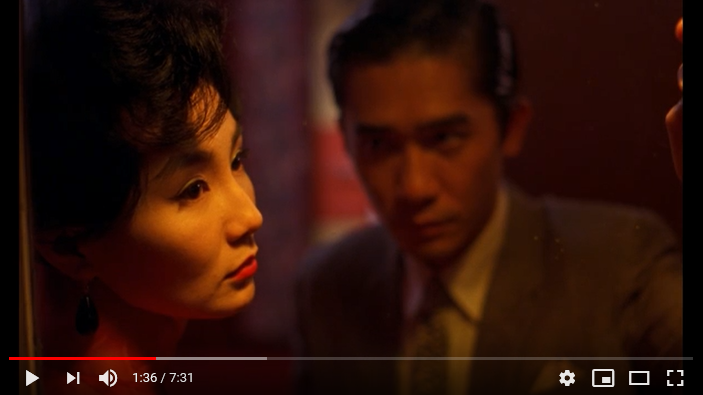
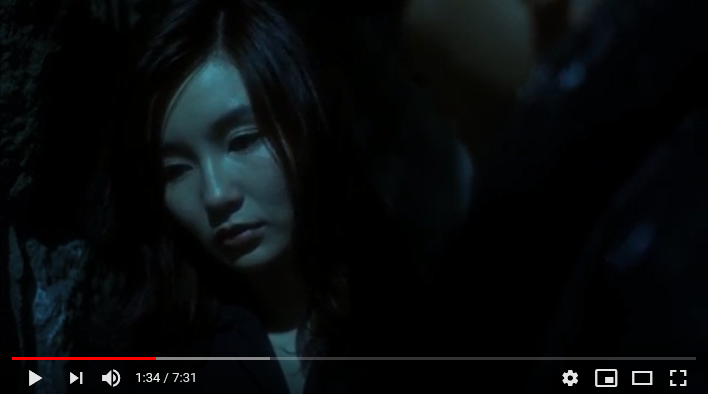
Next, I looked into Rut Blees Luxemburg, born in 1967 in Germany but relocated and set up a new life in London in 1990. Luxemburg is famous for her urban landscapes of the Capital shot at night time using a large format camera from dramatic angles (Abel – Hirsch, H 2018). Luxemburg uses artificial light achieved by the city alone to create her unique work. Inspired by German poet and philosopher Holderlin she produced the series called ‘My suicide’ which, focuses on water and nature predominantly illuminated by the cities light itself (Abel – Hirsh, H 2018). This work captivates me as I find it unique and leaves your imagination to finish creating a story she has began with her images. Luxemburg quoted to the Brisish Journal of Photography: “My approach to urban photography was founded on an attempt to deconstruct the dominant visual accounts and create different narratives”.

After looking into Luxemburg’s work I looked at one of Picasso’s favourite artist of all time – Brassai, a well known Hungarian born French photographer. Brassai is most famous for this Paris by Night photobook which, included 64 images and was created in 1933. Brassai used to photograph prostitutes and street cleaners and then on the contrary would photograph high end; opera, ballet and intellectuals such as; Picasso (artnet ND). On reading the interview Brassai had with Tony Ray – Jones I learned that the Paris By Night collection was inspired by painter Georges de la Tour and his candlelight paintings. This made Brassai think, actually.. what can light produce in the night? ( Ray – Jones, T 1970). Brassai is now known for preferring the light at night time to natural light.


Abel – Hirsch, H (2018) The British Journal Of Photography London: A visual love song https://www.bjp-online.com/2018/02/rut-blees-luxemburg-modern-project-liebeslied/ (Date accessed: 21/10/2019).
Artnet (ND) Brassai http://www.artnet.com/artists/brassaï/ (Date accessed:21/10/2019).
Jones, T R (interview 1970 – published 2011) Tony Ray – Jones interviews Brassai pt.1 https://americansuburbx.com/2011/08/interview-brassai-with-tony-ray-jones.html (Date accessed: 21/10/2019).
I have worked my way through 4.2 and 4.3. I enjoyed the egg and stone exercise although, found it much more difficult that it sounded, it was interesting to see where the light was placed how it effected the shadow from the egg. You can see all of the images and exercise 4.2 under part 4 coursework.
Thinking and planning 4.4… ROADTRIP TIME.
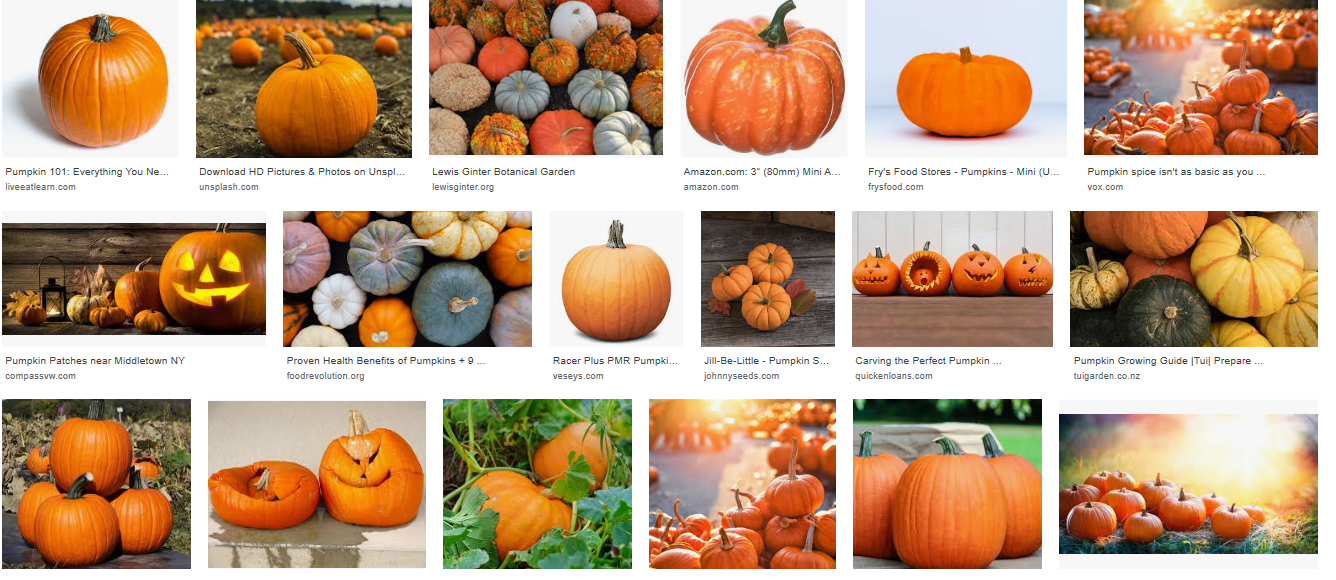
For this exercise we had to make a google image search for ‘landscapes, portrait’ or any ordinary subject such as; apple or sunset. Add a screengrab of a representative page to your learning log and note down the similarities you find between the images.
Then take a number of the same photographs of the same subject, paying special attention to the creativity criteria at the end of part one. This may involve making the subject appear incidental, for instance by using focus or framing. Or maybe begin with the observation of Ernst Haas, or the camera vision of Bill Brandt. Add a final image, with a selection of preparatory shots.
I thought long and hard about what I could do for this exercise and it just so happened that it was the day I was taking my son to go and choose a pumpkin! PERFECT, I will use pumpkins! I really enjoyed this exercise and it was nice to get out and have some fun with my camera!
Here is the google search:
& these are my images..


Assignment 4 – Languages of light.
The assignment brief for this assignment says to revisit one of the exercises on daylight, artificial light or controlled light from part four (Exercises 4.1,4.2 or 4.3) and develop it into a formal assignment submission. The submission requirement for this assignment is a set of between and six and ten high – quality photographic prints.
I decided to go with exercise 4.2 on artificial light for this assignment. You can see my full first draft assignment here.
Feedback: My research has improved – yippee! Its something I knew I really need to work on and I need focus a lot on ensuring that I put more research into this assignment. However, a pointer was that I could of interviewed a few people from the area that I shot to get more a personal and deeper feel to my images. Also, focus a little more on composition and exposure, some of the images were not compositional brilliant and a little blown out in places. In the rework I am going to look at possibly changing some of the images to more of the ‘reveal less information’ approach for example the Fowey Harbour Offices image.
For my suggested reading I am going to look at Dan Holdsworth who shows a real consistency of interest across a series and also Wolfgang Tilmans who shows a conceptual consistency across a series – I will then compare these two strategies.
Dan Holdsworth is a British photographer born in 1974 who focuses on large scale photos using traditional techniques. You can see some series of his work here https://www.danholdsworth.com/works/ on his website. Dan Holdsworth seems to mostly focus on textures/patterns and his images look science based. I read an article on the Holdsworth luminous scenes exposing the peripheries of nature by S. Rebonati (2016) where he captures the light adnd geology of the Valle De Joux, Le Brassus. Holdsworth has a clear interest in technology and science which, shows through with his work presenting scientific character. Holdsworth explained that “Wolfgang Tillmans were who inspired me the most because of the subcultural approach” Rebonati, S (2016). As my tutor said Holdsworth shows a real consistency of interest across his series, I can see this, his images show what he is interested in and when I previewed them prior to researching him I thought they were very edgy, textured and scientific.


Next, I researched Wolfgang Tillmans a German photographer born in 1968. Tillmans has a diverse workstyle resulting in a range of series based on lots of different subjects, but he does like to group them into four categories. They are; still life’s, portraits, landscapes and abstractions. Tillmans first gained his photography recognition for photography in clubs and documenting youth (public delivery 2019). Within each of these series he does show that the concept he has applied throughout the images remains with the whole series. In a statement said by Tillmans himself he explained that “Interest not in individual readings but in constructing networks of images and meaning capable of reflecting the complexity of the subject” (Warbelow, A 2001). This shows that each image doesn’t work solely but instead they work together to create a whole idea/thought/point. When Tillmans work goes to exhibitions he rarely has individual images on their own and actually prefers to have images together alongside his newspaper clippings and any other evidence of his research behind his series (Warbelow, A 2001).


I have chosen the above two images because I believe it shows how consistent his images can be within the same series, similar colours, similar layout and technically similar too. I feel that he strategically places his objects where he wants them so it is a rather set up shot rather than a natural still life image.
Similarly, the images below show consistency where they are both in a confined space and again of similar angles. These are images are all from his series Still Life.


Rebonati, S (2016) Night Vision: Dan Holdsworth’s – luminous scenes expose the peripheries of nature”. https://www.freundevonfreunden.com/interviews/night-vision-dan-holdsworths-luminous-scenes-expose-the-peripheries-of-nature-alone/ (Date accessed: 21/12/2019).
Reworking Assignment 4..
As part of my feedback for assignment four I cropped image 1 so that the boats were looking more like their own island. I carried this out using photoshop. Here is the original image:

and here is the cropped version that I am adding to the new series…

Also, as per my tutors feedback regardless less is more, I changed image 2 as the top right corner light was burnt out and this was rather distracting. I therefore, changed this image to another off my contact sheet (img2523). In this image it doesn’t reveal the full writing oppose to the original image. You can see my example of this below.

I changed this image for the one below.

I looked back through Rut Blees Luxemburg project of Liebleslied through an article called London: A visual love song in the British Journal of Photography written by Abel – Hirsh, A in 2018 here I can see a real consistency of tone and lighting. Her series flow in a way that takes the viewer on a journey and even though each image is different and contains different information to the previous one I feel as though they all have the same feel. You could almost look at a piece of work and see that it is produced by Luxemburg without knowing it was her work first.
Reviewing Luxemburg’s work got me thinking about my series and how it didn’t flow as well as it could. Therefore, I decided to alter my images. I still wanted to start with the island of boats image as I felt this was a good opening image, next, I thought the 2 orange kayak’s linked well to this image given that they were also chained down so I decided to use this as image 2. My image 3 moves on to further down the harbour looking across the Fowey offices. I feel this would make the viewers aware that they are making a journey from chained up boats further towards the harbour. This leads me onto image 4 which is a photograph of the RNLI rescue boat. As my tutor explained in my feedback this image is compositional better than the others in my original series as the boat in the foreground leads the eye to the travel towards the light. Image 5 was further along the harbour again, although this image could be questionable as to what it offers differently from the previous image I was drawn to the bridge on the left and the reflection light central which leads directly to a spotlight. Finally, for my 6th image I chose an image which was in my original set where the harbour opens up and looks across to Polruan the harbour in the distance. I like this image as the street lights to the left follow the same angle as trees and lead the eyes to the working harbour opposite.
Abel – Hirsh H (2018) British Journal Of Photography. London: A visual love song. https://www.bjp-online.com/2018/02/rut-blees-luxemburg-modern-project-liebeslied/ Date accessed: 07/01/2020
Part 5 – Viewpoint
How am I already near the end of this module? Time has flown and I have thoroughly enjoyed working my way through this guidebook, learning and developing my skills along the way.
You can see exercise 5.1 here.
Exercise 5.2 asks that you select an image by a photographer of my choice and take a photo in response to it. I can respond in anyway that I like to the whole image or to just part of it. I will add the original image with my responding image. This is known as homage – a responding image of an inspired image from another photographer.
The photographer I have decided to choose for this exercise is Edward Weston. A 20th century American photographer who as born in 1886. Weston is well known for taking photography out of the vintage age. He takes images of everday objects that are carefully composed and sharply focused, these are usually created in black and white. The images that made me want to focus my exercise on Weston were the close ups that he has taken, as O’Hagan, S (2010) explained, they become abstract and start looking like something outside of subject matter. Weston also joined the f/64 group – a group that was named after the smallest aperture in a large format camera. He was in this group alongside other famous photographer such as, Ansel Adams.
The image I have chosen is Edward Weston close up of a mushroom. I chose this image because I get the abstract feel from it, although there are elements which make you think that it is a mushroom the angle in which he has photographed it allows the mind to wander and think of what else it might be.

I happened to be out at the time without my camera at my stables when I saw a mushroom that was partially decayed and ruined by the rain and partly still standing structurally tall. I took this image below as a response to Weston’s image above.

O’Hagan, S (2010) Edward Weston: the greatest American photographer of his generation? https://www.theguardian.com/artanddesign/2010/aug/18/edward-weston-photography (Date accessed: 28/12/2019).
Personal voice response to Henri – Cartier Bresson.
On first glance of this image by Henri Cartier Bresson I mostly focused my attention on the man jumping the puddle purely because this is what it is famous for, that ‘indecisive moment’. This exercise made me look deeper into the image and I found that areas I found my eyes mostly attracted to are the ripples formed by the ladder. It made me visualise the man running along each slat individually and that is what caused the ripple effect. I am also drawn to the hoops/tubing that is also in the water. I like the way that this compliments the same shapes as the ripples being circular and oval. Upon further investigated on the image I can also see a poster of some sort above showing an image of a ballet dancer. The shape she is creating with her body sticks to the same concept as the ripples and the hoops in the water, she is curved and creating a ‘C’ shape with her body which interestingly matches the half hoop appearing below in the water. These are all interesting details that I actually missed when I first glanced at this photo in Part three of this module. This has taught me to look further into images as what we see in first instance might not be the whole picture and there are other interesting aspects hidden with the image. In my opinion because the man jumping in the photograph is just a focus point on a first look its hard to see beyond his. I tested this with my family I showed the image to three family members asking them what drew their attention and they all said of course, the man jumping the puddle.

Assignment 5 – Photography is simple..
This final assignment has an open brief. We have to take a series of 10 photographs of any subject exploring the theme ‘Photography is Simple’. Each photograph should be a unique view; in other words it should contain some new information, rather than repeat the information of the previous image.
What subject should I choose?

Looking back through the exercises which, I carried out for part 5 the build up to this assignment, I realised that enjoyed and was inspired by the abstract work of Edward Weston (mentioned above) and thought about how I would like to incorporate this into my final series submission. I decided I wanted to choose something personal, something I could take you on a journey with and something I had empathy towards. This lead me to choose the theme ‘Military’. My husband served in for the forces for just under nine years and in those nine years we married and I moved around within the army quarters with him. The military has been a big part of my life and even though my husband became a civilian 18 months ago he still helps train recruits in the army reserves as their drill instructor – therefore, the military is still a very significant part of our every day lives. Thinking of the narrative within this assignment from a personal perspective and journey.
I intend on making a series of 10 images showing an abstract insight into military life.
We are also asked to add to our assignment notes our response to exploring how we believe we have answered the brief, this is a chance for a little philosophical relfection:
My thoughts on photography is simple:
Throughout this course I have become more aware that photography is like a form of science and art mixed into one. I have found this as I only used to use auto mode before, but now I would never not use manual mode as there are so many different aspects to explore and having more control allows for an overall better picture. This has helped unravel to me that, photography can be simple especially when you are in charge. It is obvious to me that photography is built upon, pre considering your shot, the light you are working with and the technicalities your camera can withhold. But in photography you must not only think about your feelings but also how viewers may perceive your work. In conclusion, photography can be simple until you start thinking unpicking the full process and suddenly it has become complex again.
After looking into some research of war photographers and abstract photographers I began shooting for my series. I mostly took images at home indoors, but did go outside for the shots of the camouflage hat in the grass. I chose some of my most liked images and put them up on my wall for a few days to see if that would help me come to my decision on my final images for submission.
I also met with two ex servicemen from the British Army so that I could get an insight into their experiences, thoughts and feelings towards the military other than just my husbands. Both requested they were not named for privacy purposes.
The first person I spoke to was an ex rifleman who had been discharged through a medical condition. He had served in many different countries on a variety of deployments and worked hard to work his way up through the ranking system. He said “It absolutely broke me to be told I wasn’t medical fit to serve anymore, I didn’t want to leave, it wasn’t my choice, it was all I knew, what was I going to do when I got out?” I could tell by the emotion in his voice that this was still obviously a raw situation. Although, now he has a clear vision on what he wants to do, it must of been a scary experience to go through. I believe that once you have been in the military you never fully leave, often soldiers go on to join the reserves or to help run the local cadets in their area.
The second ex serviceman that I spoke to was someone who had served their full time in the army plus extension and left as they couldn’t extend any longer. This is very different to the first person I spoke to who was told he needed to leave. This man who had done his full serving time had a sense of completion about him, he seemed whole. The stories he told me about some of the countries he had visited were fascinating, describing scenes to me that you only see in movies. It makes it feel very real when you speak to someone who has experienced such life events and makes us feel very grateful for a) what they have done for our country and b) that they are still here to tell us these amazing stories. He explained the military as a “brotherhood, family & something he would never regret.
You can see my research for Assignment 5 here and my full assignment here.
I am currently awaiting feedback from my tutor on assignment 5 so this is my time to really prepare for assessment and to go through my assignment make sure that they have all been reworked and that I have neatened up the edges on the blog.
Feedback from my tutor:
I am really happy with the feedback from my tutor. My overall comments were that I showed some good observations on my annotated contact sheets for example where I had noted that the poppy was revealing too much information so decided not to go through with this idea. I showed some good visual consistency but this could however be refined further.
I still need to think about how to communicate through the series rather than each individual image this is something I find tricky because I analyse each image individually, which Isn’t a bad thing to do technically but for fluency and ‘putting myself in the viewers shoes’ It would be a good skill to grasp!
My tutor did say that I could possibly make the images even less revealing and that I could use the interviews of the ex servicemen to guide my practical work for example where the rifleman got medically discharged through injury – I could take an image of his cap badge just slightly out of the frame as if being pushed out.
Next, in my feedback my tutor mentioned how I could actually run another two series of images alongside my portrait series of my husbands military career I could also include the series of the rifleman and the series of the ex cavalryman. This is something I will definitely consider in the rework of my assignment.
My suggested reading was on Broomberg and Chanarin which you can see here in the feedback section of assignment 5.
Reworking Assignment 5:
Follwing on from my feedback on assignment 5 and given that I am already in the submission dates for assessment results in my reworking for assignment 5 being minimal. I have decided against adding in the two extra series as I don’t believe I can shoot, edit and form these two series in the short time frame I have left but I will however, take that advice from my tutor forward on further modules.
Speaking to my tutor we discussed how researchers work can influence our own work for example the silhouette image of Hetherington’s my thoughts and feelings on this and how it links to my assignment (please see entry below).
How Hetheringtons work influenced mine…

The image above is from Hetherington’s Liberia at Peace series. I particularly like this image and believe it links and is connected to my assignment 5 because through my series I am exploring the anonymity of a solider. Each image declares and reveals information based on my husband in the military. Acting like a portrait I used each image to create a picture/portrait of this person who serves in the military. Just like the silhouettes in Hetherington’s image where we cannot make out who each of those soldiers are, my series too doesn’t expose specifically who the soldier is. I intentionally didn’t include any human faces or other body parts in my images because I didn’t want to reveal too much.
Applying for assessment!
Just applied for assessment, its all becoming real now! I am starting to get everything together ready for assessment, I’ve got some questions I am going to put forward to my tutor to make sure I am on the right track. I will update you as we go with my preparing for assessment 🙂
I have ordered my clam shell box and have a sample of a few of my prints coming from the local printing company so I can check the quality before I order them all.
I audio video called my tutor and asked a few questions in regards to what needs submitting and what can just be loaded onto the G drive. I am a lot clearer now as to what can be submitted.
 Heather Wade OCA Blog